Video: Error Correction in Speaking – The Fun Way
[ELTWeekly Volume 6, Issue 12 | May 12, 2014 | ISSN 0975-3036] In the fourth of his teaching tips for teenagers, Herbert Puchta looks at fun ways of correcting students' mistakes.
[ELTWeekly Volume 6, Issue 12 | May 12, 2014 | ISSN 0975-3036] In the fourth of his teaching tips for teenagers, Herbert Puchta looks at fun ways of correcting students' mistakes.
[ELTWeekly Volume 6, Issue 12 | May 12, 2014 | ISSN 0975-3036]
This article is written and submitted by Reena Mittal.
One of the main goals of Language Teacher is to provide students with the tools to be effective for SLL(Second Language Learning). Often we assign projects and assignments and other task but we forget the main tool which work for language learning is MOTIVATION. In learning a second language motivation is a crucial force which determines if the learner takes the given task seriously and how much energy and time he devote to it. Motivation contains many components as –
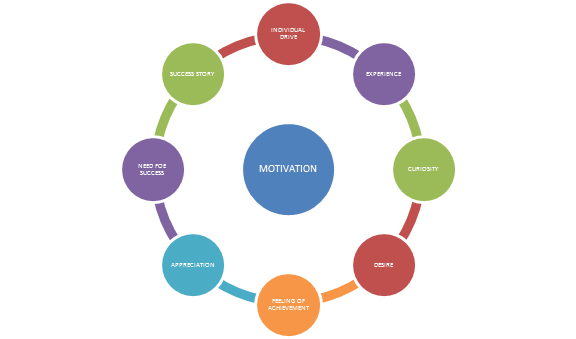
In order to follow the given chart a teacher really has to work hard. First of all, they have to make a learning programme which is based on practical experience and increase student’s interest and motivate them. (more…)
[ELTWeekly Volume 6, Issue 12 | May 12, 2014 | ISSN 0975-3036]
This paper is written and submitted by Dr. Anand Mahanand, EFL University, Hyderabad.
Abstract
We understand folklore as wisdom of people transmitted from generation to generation. They are a repertoire of traditional knowledge and wisdom. They include songs, tales, chants, proverbs and riddles and so on. We can get information and knowledge about medicines, skills, culture, rituals and other historical facts from folklore. Many forms of folklore such as tales, songs, riddles, proverbs, chants and so on have been playing a significant role in educating people since time immemorial. Among these forms, songs, stories and proverbs perform pedagogic role more than other forms do. The pedagogical role of stories and songs has been discussed elsewhere. Therefore, in this paper I will focus on the role of proverbs in teaching English. I have used proverbs from both from Eastern and Western parts of Odisha situated in Eastern India.
Before that, let us consider a few definitions of proverbs. A proverb is defined as “short , pregnant criticism of life based upon common experience.” Shipley 19970: 258). As the definition says proverbs are drawn from experience. Though they are short, they can convey a world of meaning. (Mc Arthur 1998:474) defines proverbs as “short traditional saying of a didactic or advisory nature in which a generation is given a specific often metaphorical expression” It is also defined as “ a short, pithy, popular saying, long in use, embodying some familiar truth, practical precept, or usual thought in expressive and often picturesque language.” Kuskovskaya defines them as “short sentences expressing a well known truth or a common fact familiar to experience.” (Kuskovskaya 1978: 3). The paper reports how learners draw resources from their local knowledge reservoir when we use proverbs using multilingual approach to teach English.
Key words: folklore, multilingual contexts, proverbs, pedagogy, traditional knowledge (more…)