Article: ‘Second Language gives Two Visions to Life’ by Reena Mittal

[ELTWeekly Volume 6, Issue 15 | June 9, 2014 | ISSN 0975-3036]


This article is written and submitted by Reena Mittal.

Language is an inseparable part of human society. Civilization and growth of Human is only possible through language. It is because of language that humanity has come out from Stone Age to the age of Technology, Science and Arts. Language is a means of expression, communication and systematisation. Learning of language is not an automatic process. It can only be learnt by practice, imitation and continuous effort. There are five major rules which must be followed by every new learner to the language especially when you are learning English as L2.

Fluency of English is not actually based on correct use of Grammar because sometimes rules are deviated in English. So, learn rules but flexibility according to situation is also mandatory to learn as many a times English Grammar deviates its own rules.

Phrases also play an important role in spoken English because howsoever words you know, still some construction only does not want words or vocabulary but they want a particular phrase. So, for learning and speaking English, one must be familiar with phrases. (more…)
Continue ReadingArticle: ‘Second Language gives Two Visions to Life’ by Reena Mittal

Research Paper: ‘Aspects of Editing’ by Professor (Dr) Shibu Simon

[ELTWeekly Volume 6, Issue 14 | May 26, 2014 | ISSN 0975-3036]


Introduction

At the height of the Communicative Approach to language teaching in the late Eighties and in the early Nineties, it had become fashionable to speak derisively of translation, and also to some extent of editing, for its association with the ‘old-fashioned’ Grammar Translation Method1 (Duff 160). It was largely felt that translation and editing were drab academic exercises with no use for interactive and communicative use of language in classrooms and that they were more or less professional or commercial in their application.  However, of late there has been a revival of interest in translation and editing studies and in their adaptability and suitability for language classrooms to help learners learn the language rather than learn ‘about’ the language. Štulajterova points to this new trend (1),

Until recently, translation was out of favour with the language teaching community [. . . .] The reason why translation is, even today, ignored by many teachers as an effective language learning activity is mainly because teachers often feel that translation involves no oral interaction and therefore is not a communicative activity, and that it is not suited to the general needs of the language learner. Moreover, many of them consider use of the mother tongue in foreign language teaching undesirable, or feel that translation is time-consuming, boring and irrelevant. This does not have to be the case.

What Štulajterova speaks about translation is also true of editing. Like translation, editing too was misunderstood, but editing can be effectively used in different teaching contexts ranging from instruction to evaluation and to improve all the four language skills including oral skills if used resourcefully by a teacher. (more…)

Continue ReadingResearch Paper: ‘Aspects of Editing’ by Professor (Dr) Shibu Simon

Article: ‘Motivation: A Key Factor in Second Language Learning’ by Reena Mittal

[ELTWeekly Volume 6, Issue 12 | May 12, 2014 | ISSN 0975-3036]


This article is written and submitted by Reena Mittal.

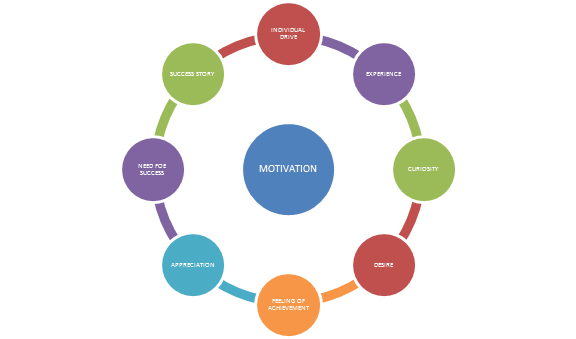
One of the main goals of Language Teacher is to provide students with the tools to be effective for SLL(Second Language Learning). Often we assign projects and assignments and other task but we forget the main tool which work for language learning is MOTIVATION. In learning a second language motivation is a crucial force which determines if the learner takes the given task seriously and how much energy and time he devote to it. Motivation contains many components as –

ELTWeekly_Reena_Mittal

In order to follow the given chart a teacher really has to work hard. First of all, they have to make a learning programme which is based on practical experience and increase student’s interest and motivate them.  (more…)

Continue ReadingArticle: ‘Motivation: A Key Factor in Second Language Learning’ by Reena Mittal